Fort Worth, Texas - As artificial intelligence becomes a routine part of communications work, Story & Strategy and Texas Tech University's College of Media & Communication Graduate Program are partnering to bring a timely discussion on AI, trust and leadership to North Texas.
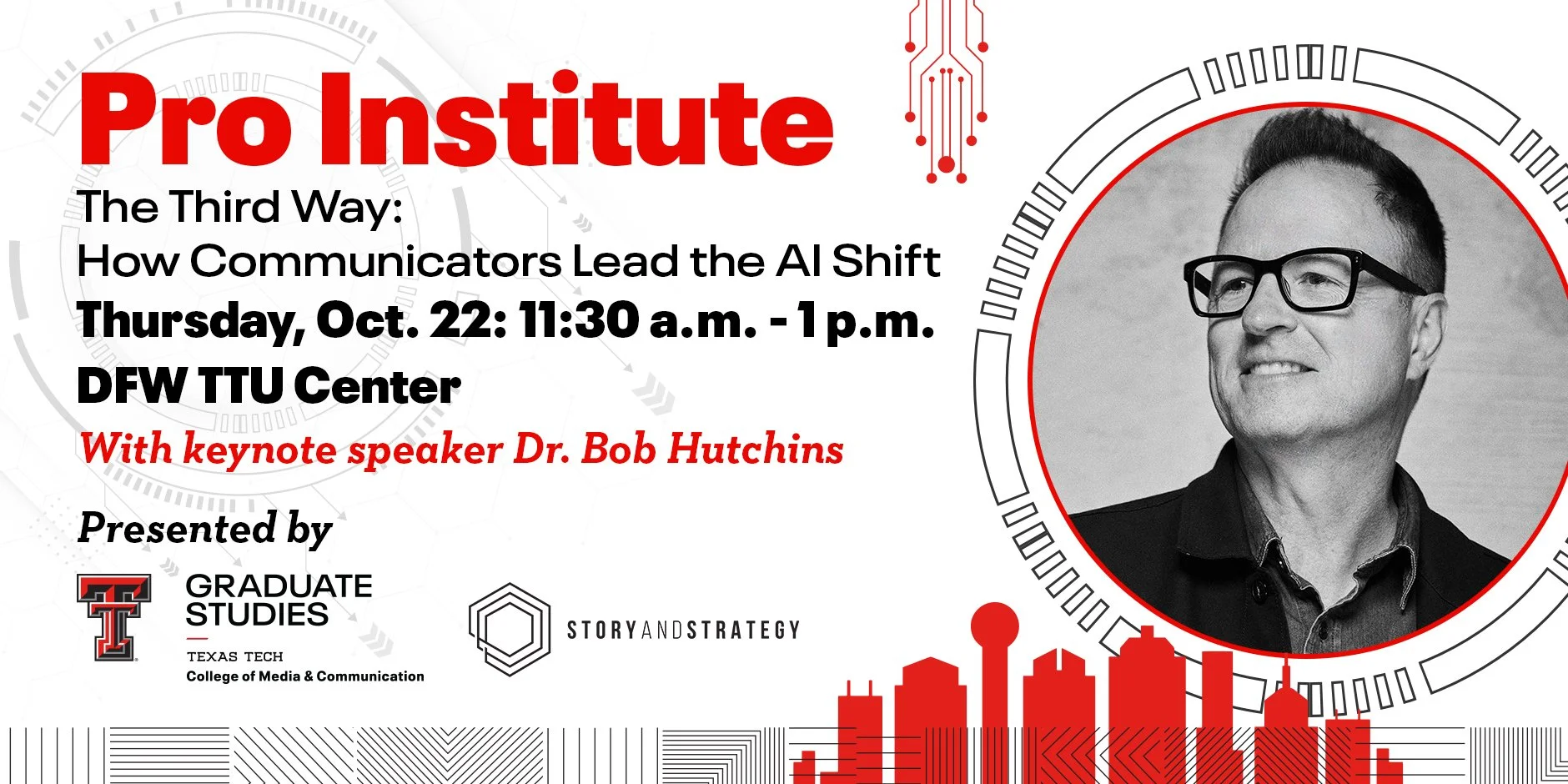
The organizations will host the inaugural Pro Institute: How Communicators Lead the AI Shift on Oct. 22, featuring Bob Hutchins, Ph.D., author of “What AI Reveals.” The event will be available both in person and virtually, giving communications professionals, marketers, executives and organizational leaders an opportunity to explore how AI is reshaping the profession and what role communicators should play in guiding that change.
The event comes at a time when AI adoption among communications professionals is accelerating rapidly.
According to Story & Strategy's 2026 State of Communications in Dallas-Fort Worth Report, 84% of DFW communications professionals say they use AI occasionally or frequently as part of their work. The findings suggest that AI has moved beyond experimentation and become a regular tool in the communications toolkit.
However, the report also revealed a significant gap between adoption and governance.
While 84% of respondents reported using AI, only 31% said their organizations have clear, documented guidelines governing its use. Another 33% reported having no AI guidelines at all, while 28% said their organizations rely on informal guidance.
Those findings highlight a challenge many communicators now face: helping organizations navigate rapid technological change while maintaining trust, transparency and ethical decision-making.
"Communicators are uniquely positioned to help organizations adapt responsibly," said Kim Brown, APR, co-founder of Story & Strategy. "We're often the people advising leadership teams, shaping messaging, managing reputation and building trust with stakeholders. As AI becomes more integrated into the workplace, communicators have an opportunity to lead those conversations."
The survey also found that the most common uses of AI among DFW communicators include brainstorming, drafting content, research, communications planning and generating data insights. At the same time, respondents expressed growing concerns about accuracy and the long-term implications of AI adoption.
One survey participant summarized the sentiment this way: "AI can be a positive, but we need to focus on the ethics of using it and discuss what's ethical and what's not."
Those concerns helped shape the vision for the Pro Institute.
Rather than focusing solely on the technical capabilities of AI, the event will examine its impact on trust, leadership and organizational culture. Dr. Hutchins' work centers on what he calls "The Third Way," an approach that moves beyond both the hype and fear surrounding artificial intelligence to explore how organizations can embrace innovation while preserving human connection.
For Story & Strategy, the event is part of a broader commitment to supporting communications professionals throughout the region.
"We wanted to create a conversation that reflects the realities communicators are facing right now," said Abigail Hoover, co-founder of Story and Strategy. "The data tells us AI is already transforming the profession. The next challenge is helping organizations navigate that transformation thoughtfully and strategically."
The Pro Institute will be held Oct. 22 and is open to communications professionals, marketers, business leaders, students and educators. Attendees may participate either in person or virtually.
Registration is available through Eventbrite: https://www.eventbrite.com/e/pro-institute-how-communicators-lead-the-ai-shift-tickets-1995937219954